

No. I
From H.B.M.‘s Resident, Perak, to Colonial Secretary, Straits Settlements Residency, Kwala Kansa, December 14, 1878.
Sir — In reference to your letter of the 28th June last, directing, by command of His Excellency the Governor, my particular attention to the plan adopted in Selangor for the extinction of the claims against slave-debtors, by a valuation of their services to their creditors according to a fixed scale, and directing me to consider to His Excellency with a view to its being afterward submitted for the consideration of the Council of State:
1. I have the honor to state in reply that a copy of that letter and its inclosure was supplied to the Assistant Resident of Perak, and its contents communicated to the other magistrates, with instructions on all occasions in which such cases should be brought before them, to endeavor, with the consent of the creditors, to come to a settlement on such a basis.
2. The Toh Puan Halimah, daughter of the exiled Laxamana of Perak, and chief wife of the banished Mentri of the State, had invested most of her private money in advances of this description, which, up to the time of British interference, was the favorite form of security, and she is now the largest claimant in the country for the repayment of her money. Another, Wan Teh Sapiah, has also claims of a like nature on several families, and both these ladies willingly undertook to accept of liquidation by such an arrangement.
3. In the former case it has, I am sorry to say, fallen through, from the impossibility of inducing the debtors to work regularly, and from very many of them, who are living in entire freedom in different parts of the country, declining to come into the arrangement, though acknowledging their debts.
4. In many other cases the creditors from the first put forward the certainty of the failure of such a system from the above-mentioned cause; others have objected that they had no regular employment in which to place their debtors; others, that they are utterly ruined by the events of recent years, and that they would accede to the proposal if fairly carried out on the other part, provided the Government would advance money as the native Rajahs did to enable them to open mines or gardens in which they could employ their debtors; nearly all have declared themselves willing, and even anxious, to accept a just amount in payment of their debts, several suggesting that the State might conveniently undertake to do this, employing the labor in public works until the debtor should be free.
5. I cannot undertake to say what may have been the practice in former times, as to the treatment, in Perak, of this class of persons; but no case of cruelty or any great hardship has been brought to my notice since I came into the country. By far the larger number of the slave-debtors live with their families apart and often at great distances from their masters, enjoying all the fruits of their labor, rendering occasional assistance to them when called upon to do so, which, in the majority of cases, is of rare occurrence.
6. The circumstances of Perak would probably be found to differ from those of Selangor, which I understand has a much smaller population; was governed by an enlightened ruler under the advice of British Residents, who succeeded in introducing the present regulation immediately after the conquest of the district.
7. To introduce such a measure into Perak at the present time would, in my opinion, have a very disturbing effect, and although I do not think that it would lead to any extensive or organized armed resistance, I am sure that it would so shake the confidence which has arisen between the European officers and principal people that years would be required to restore it.
8. I confess that I am not able to devote all my sympathy to the weaker class in this question. I concur with the principal natives that the introduction of a measure which formed no part of the original contract would practically amount to a confiscation of their property, the value of the labor of this class of persons being scarcely more than nominal; and I adhere to the opinion that the just and politic course is, as has been done, to prohibit any extension or renewal of the practice either of slave indebtedness or slavery; to secure good treatment for the servile classes under penalty of enforced manumission; to reduce claims when they come before the magistrates to the minimum which justice to the creditor will permit; to await the increased means of freeing themselves which must develop for the poorer classes upon the extensive introduction of European capital into agricultural industries; and, finally, to purchase at a rate which, in consequence of the notorious discouragement with which every case is treated by the European officers and the courts, and the pressure of other influences, will, in time, be much diminished from what would probably be considered a fair equivalent. I have, etc.,
(Signed) Hugh Low, Resident. The Hon. the Colonial Secretary, Straits Settlements, Singapore.
No. II
From H.B.M.‘s Resident, Perak, to the Honorable the Colonial Secretary
Teluk Anson, April 26, 1882.
Sir — I have the honor to acknowledge the receipt of your letter of the 14th instant, calling upon me for information as to the progress made toward the extinction of debt slavery in this State since 1879, for transmission to Her Majesty’s Secretary of State.
2. In reply I have the honor to report that the policy explained in my letters to your predecessor, dated 28th May and 14th December, 1878, has been steadily pursued in Perak; all slave debtors who have appealed to the protection of the courts having their cases adjudicated upon on the most liberal terms consistent with justice to the creditors, and a considerable number have availed themselves of the facilities presented to them and bought up the claims upon them.
3. Further and more intimate knowledge of the people has confirmed the impression that whatever may have been the case in former times, cruelty to slaves or slave debtors has been very rare since the establishment of settled government, and in every instance in which such has come to my knowledge or to that of the British officers, manumission without compensation was carried out.
4. Three such cases have occurred in the families of two very high officers of State, and these, with one other case, are all the instances of cruelty which have been reported to me.
5. An attempt was made in 1879 to procure a census of the population through the chiefs of the village communities. Each of these chiefs recorded the name of every householder in his district with the number of persons, distinguishing their sex and condition.
6. A total of 47,359 is thus arrived at for the free native Malay population. Of these 14,875 were males above, and 9,313 below, 16 years of age. The females numbered 14,761 and 8,410.
7. The number of slaves was returned as 1,670, of whom 775 were males and 895 females. The slave debtors were respectively 728 and 652, giving a total of 1,380; the two servile classes numbering, of both sexes, 3,050. I fear, however, that these numbers do not include all the bond population, as His Highness the Regent and one or two others with extensive claims did not give in returns.
8. I regret to state that the attempt which, as reported in my letter of the 14th December, was liberally made by the Toh Puan Halimah, chief wife of the ex-Mentri of Perak, to facilitate the manumission of her slaves and debtors by working off the just claims against them on fair terms, was successful only to a very inconsiderable extent. The Malays of Perak are, as a rule, so adverse to and so unaccustomed to steady labor, and can so easily provide for their wants, that they altogether decline, except for short periods, to perform services of any nature even for high wages.
9. The opinion of those having claims upon the servile classes is now pretty general in favor of manumission upon equitable terms, and although a few old Conservative families in such districts as Kinta would prefer to adhere to the former state of things, I have considered that the time has arrived when a general measure having this end in view may be taken into consideration in the hope of carrying it out completely in the year 1883.
10. His Excellency the Governor may have observed in the minutes of the March Session of the Council of State that the subject of manumission of slaves and debtors was brought to the notice of His Highness, the Regent by the Resident, and that a meeting of the Council was appointed for the 15th May, for the purpose of considering the terms on which such a measure should be based, and the manner in which it should be carried out.
11. My own idea is that a commission, consisting of one or two native chiefs and the principal European officer of each district, should be appointed to inquire, under written instructions, into the circumstances of each case, and award, subject to the approval of the Government, such compensation as may seem fair to both parties; that the money necessary to pay the amounts awarded shall be advanced by the Government; that the sum adjudged to be paid for manumission shall remain in whole or in part, as may be determined in Council, a debt from the freedman to the State, which he shall be bound to repay by a deduction of a portion of his wages for labor on the public works of the country, which he must continue until his debt is cleared off, should he be unable or unwilling to raise the money by other means; that male relatives shall take upon them the obligations incurred for the freedom of female relations who may themselves be unable to pay; and that, from the date of the completion of the measure, every person in the State shall be absolutely free, and slavery and bond indebtedness declared to be illegal institutions and forever abolished.
12. I have formerly stated it as the opinion of the best informed natives that a sum varying from $60,000 to $80,000 would be sufficient to meet the necessary expenditure, but I fear that the larger amount would be insufficient, as it would be advisable to deal with an institution involving so great a change in the habits of, and loss to the people, with a certain measure of liberality. I have, etc.
(Signed) Hugh Low, Resident. The Hon. the Colonial Secretary, etc., etc., etc., Straits Settlements.
| Table of Contents | Next |
Sunday, October 11, 2009


The Golden Chersonese and the way thither
APPENDIX B (Table Of Content)
Slavery in the Malay States.
Langat, 30th June, 1875.
Sir — When on board the Colonial steamer Pluto last week, accompanying His Excellency the Governor in a tour to some of the native States, His Excellency made inquiry of me with regard to the present state of debt-slavery in the Peninsula.
This was a subject so large and important as hardly to admit of thorough explanation in a conversation; I therefore asked His Excellency’s leave to report upon it.
I now beg to give you a detailed account of the circumstances of debt-slavery as known to me personally.
In treating the question under its present condition — I mean under Malay rule — it is necessary to consider the all-but slavery of the debtors and the difficulty of making any arrangement between debtor and creditor which while it frees the one will satisfy the other, and still be in keeping with the “adat Malayu,” as interpreted in these States.
The relative positions of debtor and creditor in the Western States, more especially in Perak, involve evils which are, I believe, quite unknown to Europeans, even those living so near as Singapore.
The evils to which I refer have hitherto been regarded as unavoidable, and a part of the ordinary relations between Rajahs and subjects.
I may premise by saying that though the system of “debt-slavery,” as it has been called, exists to some extent in all the States, it is only seen in its worst light where a Rajah or chief is the creditor and a subject the debtor.
Few subjects in a Malay country are well off. The principal reason of this is, that as soon as a man or woman is known to be in possession of money, he or she would be robbed by the Rajah; or the money would be borrowed with no intention of future payment, whether the subject wished to lend or not.
Thus, when a Ryot (or subject) is in want of money, he goes to his Rajah or chief to lend it him, because he alone can do so. Either money or goods are then lent, and a certain time stipulated for payment. If at the expiration of that time the money is not paid, it is usual to await some time longer, say two or three, or even six months.
Should payment not then be made, the debtor, if a single man, is taken into the creditor’s house; he becomes one of his followers, and is bound to execute any order or do any work the Rajah as creditor may demand, until the debt is paid, however long a time that may be.
During this time the Rajah usually provides the debtor with food and clothing, but if the creditor gives him money, that money is added to the debt.
Often, however, the Rajah gives nothing, and the debtor has to find food and clothing as he can.
Should the debtor marry — and the Rajah will in all probability find him a wife — then the debtor’s wife, his children, his grandchildren, all become equally bound with himself to the payment of this debt.
Should the debtor be originally married, then not only he, but his wife and children, are taken into the Rajah’s house, and are his to order until the debt is paid.
Should the debtor be a woman, unmarried, or a widow, the same course is taken, and whoever marries her becomes jointly responsible for the debt; and this goes on through generations — the children and grandchildren of the debtor being held in the same bondage by the children and grandchildren of the creditor.
Should at any time the debtor succeed in raising the amount of the debt and proffer it to the creditor, then it would be customary to accept it. If, however, a large family were in bondage for the debt, one whose numbers seemed to the Rajah to add to his dignity, then he would probably refuse to accept payment, not absolutely, but would say “wait,” and the waiting might last for years.
Debtors once absorbed into the Rajah’s household are looked upon as his property, just as his bullocks or his goats, and those who alone would have the power to interfere look on and say nothing, because they do the same themselves.
In different States this debtor-bondage is carried to greater or less extremities, but in Perak the cruelties exercised toward debtors are even exclaimed against by Malays in other States.
Many chiefs in Perak have a following principally composed of young men and girls, for the most part debtors.
The men are treated as I have already described — either food and clothes are found for them or not; they are usually found — for the Rajah’s power and his pride consists in the number of arms-bearing followers he has at his beck and call; men, too, are useful to him in many other ways. Those who have grown old in their bondage, whether men or women, either for very shame the Rajah provides for, or he compels their children to support them.
The men either (1) follow because they like it (a very small percentage indeed); or (2) they are debtors, or the children of debtors; or (3) they are real slaves from Sumatra or Abyssinia, or the children of slaves.
The girls are treated differently; they are (1) either slaves or the daughters of slaves; or (2) debtors, the daughters or granddaughters of debtors; or (3) the Rajah has simply taken them from their houses into his own house because he wanted them; or (4) they follow him for pleasure.
In Perak some of the chiefs do not provide their girls with food or clothing, but they tell them to get these necessaries of life as best they can, i.e., by prostitution — for the labor of the debtor being the property of the creditor, prostitution is in this case a necessity and not a choice.
Each Rajah in his own district claims the privilege of fining, either for a capital offence or for a trifling misdeed. Should, then, a man be fined and not pay the fine, he and his family, if he has one, are at once taken into this debt-bondage, not to work out the fine, but to toil away their lives amid blows and upbraidings — the daughters driven to prostitution, the sons to thieving, and even greater crimes.
This is no exaggerated statement, but the plain truth.
When the Rajah gives nothing, neither food nor clothes, or when he is a passionate man, and threatens to kill one or other of his followers for some trivial offence, or for no offence at all, it often happens that one will seek refuge in flight. If caught, though, it may be said to be the received custom to inflict only some slight punishment; yet that would not deter a Rajah from punishing such an offence even with death should it seem good to him.
Bond-debtors are handed about from one Rajah to another without a thought of consulting them. If one runs away and is caught, it is at great risk of being put to death, while probably no one would move a finger to save him, his master excusing himself on the plea that it is necessary to frighten others from running away also.
These Rajah-creditors would tell you smilingly that they knew by Mohammedan law the creditors can take and sell all their debtor’s property for an overdue debt, and that then the debtor is free; but they never act on that principle.
Many men and women, however, rarely incur debts, knowing well what lies before them in case of non-payment.
Malays, by their laws, are allowed to buy and sell slaves, and if, having for years lost sight of a slave, the owner finds him or her, he takes the slave with his wife and family, if he has one, as his lawful property.
There is one other phase of debtor-bondage, and that a common one, where the father or mother places one or more of their own children as security with the creditor for a debt; thus in reality selling their own flesh and blood into often a life-long bondage. If these children die on the creditor’s hands, the parents supply their places by others, or the Rajah, should he wish it, can at any time after the debt is due, take the whole family into his house.
Only the other day a man here, for a debt of $40, placed his daughter in a Rajah’s hands and ran away. Probably he will never return; meanwhile the girl must obey her master in all things like the veriest slave. Such a state of things as this is only brought about by the custom which allows it.
Another common practice in the States, more especially in Perak, is to capture, as you might wild beasts, the unoffending Jakun women, and make them and their children slaves through generations.
In April I was in Ulu Selangor, and the headmen there complained that a chief from Slim had a fortnight before caught 14 Jakuns and one Malay in Ulu Selangor, had chained them and driven off to Slim. Arrived there, the Malay was liberated and he returned.
Letters were written to Slim and Perak, but though we ascertained the party had reached Slim, they did not remain there, and they have not yet been discovered.
I have already stated that the Rajah looks to the number of his following as the gauge of his power, and other Rajahs will respect and fear him accordingly. Thus he tries to get men into his service in this way, and is rather inclined to refuse payment should the debtor be so fortunate as to raise the requisite amount of his debt.
Almost the only chance the debtor has of raising this amount is by successful gambling. Of course it hardly ever happens that he is successful; but, like all gamblers, he always thinks he will be, and thus gambling becomes a mania with him, which he will gratify at all costs, caring little by what means he gets money for play so long as he does obtain it.
These are the general facts relating to the position of the slave-debtor, and these things which I have described, seemingly so difficult of belief, are done almost daily; looked upon by those who do them as a right divine; by the victims as a fate from which there is no reprieve.
To compel his followers to obey him implicitly, the Rajah treats them with a severity which sometimes makes death the punishment of the slightest offence to him. These followers he thus holds to do whatever he bids them, even to the commission of the gravest crimes.
They again, having to provide themselves with food and clothes, and yet having to work for him, are led to prey on the defenceless population, from whom, in the name of their Rajah-master, they extort whatever there is to get, and on whom they sometimes visit those cruelties which they have themselves already experienced.
This system of debtor bondage influences, then, the whole population, not slightly but deeply, in ways it is hardly possible to credit except when seen in a constant intercourse with all classes of Malay society.
The question at issue seems to be; how to deprive the Rajah of this great power — an unscrupulous instrument in unscrupulous hands — how to free the debtors from their bondage, the women from lives of forced prostitution, the unoffending population from the robberies and murderous freaks of Rajahs and their bondsmen.*
[*Some of these remarks apply specially to Selangor, in which State slavery is now abolished. I. L. B.]
In Perak it is different; the debtor-bondage is one of the chief customs — one of the “pillars of the State” — an abuse jealously guarded by the Perak Rajahs and Chiefs, and especially by those who make the worst uses of it.
I have often discussed this question of debt-slavery with the Malays themselves, but they say they see no way under the rule of their Rajahs to put down this curse of their country, with all the evils that follow in its train. I have, etc.
(Signed) Frank A. Swettenham, (Now Asst. Colonial Secretary at Singapore.) The Honorable the Secretary for Native States, Singapore, Straits Settlements.
| Next |
Slavery in the Malay States.
Langat, 30th June, 1875.
Sir — When on board the Colonial steamer Pluto last week, accompanying His Excellency the Governor in a tour to some of the native States, His Excellency made inquiry of me with regard to the present state of debt-slavery in the Peninsula.
This was a subject so large and important as hardly to admit of thorough explanation in a conversation; I therefore asked His Excellency’s leave to report upon it.
I now beg to give you a detailed account of the circumstances of debt-slavery as known to me personally.
In treating the question under its present condition — I mean under Malay rule — it is necessary to consider the all-but slavery of the debtors and the difficulty of making any arrangement between debtor and creditor which while it frees the one will satisfy the other, and still be in keeping with the “adat Malayu,” as interpreted in these States.
The relative positions of debtor and creditor in the Western States, more especially in Perak, involve evils which are, I believe, quite unknown to Europeans, even those living so near as Singapore.
The evils to which I refer have hitherto been regarded as unavoidable, and a part of the ordinary relations between Rajahs and subjects.
I may premise by saying that though the system of “debt-slavery,” as it has been called, exists to some extent in all the States, it is only seen in its worst light where a Rajah or chief is the creditor and a subject the debtor.
Few subjects in a Malay country are well off. The principal reason of this is, that as soon as a man or woman is known to be in possession of money, he or she would be robbed by the Rajah; or the money would be borrowed with no intention of future payment, whether the subject wished to lend or not.
Thus, when a Ryot (or subject) is in want of money, he goes to his Rajah or chief to lend it him, because he alone can do so. Either money or goods are then lent, and a certain time stipulated for payment. If at the expiration of that time the money is not paid, it is usual to await some time longer, say two or three, or even six months.
Should payment not then be made, the debtor, if a single man, is taken into the creditor’s house; he becomes one of his followers, and is bound to execute any order or do any work the Rajah as creditor may demand, until the debt is paid, however long a time that may be.
During this time the Rajah usually provides the debtor with food and clothing, but if the creditor gives him money, that money is added to the debt.
Often, however, the Rajah gives nothing, and the debtor has to find food and clothing as he can.
Should the debtor marry — and the Rajah will in all probability find him a wife — then the debtor’s wife, his children, his grandchildren, all become equally bound with himself to the payment of this debt.
Should the debtor be originally married, then not only he, but his wife and children, are taken into the Rajah’s house, and are his to order until the debt is paid.
Should the debtor be a woman, unmarried, or a widow, the same course is taken, and whoever marries her becomes jointly responsible for the debt; and this goes on through generations — the children and grandchildren of the debtor being held in the same bondage by the children and grandchildren of the creditor.
Should at any time the debtor succeed in raising the amount of the debt and proffer it to the creditor, then it would be customary to accept it. If, however, a large family were in bondage for the debt, one whose numbers seemed to the Rajah to add to his dignity, then he would probably refuse to accept payment, not absolutely, but would say “wait,” and the waiting might last for years.
Debtors once absorbed into the Rajah’s household are looked upon as his property, just as his bullocks or his goats, and those who alone would have the power to interfere look on and say nothing, because they do the same themselves.
In different States this debtor-bondage is carried to greater or less extremities, but in Perak the cruelties exercised toward debtors are even exclaimed against by Malays in other States.
Many chiefs in Perak have a following principally composed of young men and girls, for the most part debtors.
The men are treated as I have already described — either food and clothes are found for them or not; they are usually found — for the Rajah’s power and his pride consists in the number of arms-bearing followers he has at his beck and call; men, too, are useful to him in many other ways. Those who have grown old in their bondage, whether men or women, either for very shame the Rajah provides for, or he compels their children to support them.
The men either (1) follow because they like it (a very small percentage indeed); or (2) they are debtors, or the children of debtors; or (3) they are real slaves from Sumatra or Abyssinia, or the children of slaves.
The girls are treated differently; they are (1) either slaves or the daughters of slaves; or (2) debtors, the daughters or granddaughters of debtors; or (3) the Rajah has simply taken them from their houses into his own house because he wanted them; or (4) they follow him for pleasure.
In Perak some of the chiefs do not provide their girls with food or clothing, but they tell them to get these necessaries of life as best they can, i.e., by prostitution — for the labor of the debtor being the property of the creditor, prostitution is in this case a necessity and not a choice.
Each Rajah in his own district claims the privilege of fining, either for a capital offence or for a trifling misdeed. Should, then, a man be fined and not pay the fine, he and his family, if he has one, are at once taken into this debt-bondage, not to work out the fine, but to toil away their lives amid blows and upbraidings — the daughters driven to prostitution, the sons to thieving, and even greater crimes.
This is no exaggerated statement, but the plain truth.
When the Rajah gives nothing, neither food nor clothes, or when he is a passionate man, and threatens to kill one or other of his followers for some trivial offence, or for no offence at all, it often happens that one will seek refuge in flight. If caught, though, it may be said to be the received custom to inflict only some slight punishment; yet that would not deter a Rajah from punishing such an offence even with death should it seem good to him.
Bond-debtors are handed about from one Rajah to another without a thought of consulting them. If one runs away and is caught, it is at great risk of being put to death, while probably no one would move a finger to save him, his master excusing himself on the plea that it is necessary to frighten others from running away also.
These Rajah-creditors would tell you smilingly that they knew by Mohammedan law the creditors can take and sell all their debtor’s property for an overdue debt, and that then the debtor is free; but they never act on that principle.
Many men and women, however, rarely incur debts, knowing well what lies before them in case of non-payment.
Malays, by their laws, are allowed to buy and sell slaves, and if, having for years lost sight of a slave, the owner finds him or her, he takes the slave with his wife and family, if he has one, as his lawful property.
There is one other phase of debtor-bondage, and that a common one, where the father or mother places one or more of their own children as security with the creditor for a debt; thus in reality selling their own flesh and blood into often a life-long bondage. If these children die on the creditor’s hands, the parents supply their places by others, or the Rajah, should he wish it, can at any time after the debt is due, take the whole family into his house.
Only the other day a man here, for a debt of $40, placed his daughter in a Rajah’s hands and ran away. Probably he will never return; meanwhile the girl must obey her master in all things like the veriest slave. Such a state of things as this is only brought about by the custom which allows it.
Another common practice in the States, more especially in Perak, is to capture, as you might wild beasts, the unoffending Jakun women, and make them and their children slaves through generations.
In April I was in Ulu Selangor, and the headmen there complained that a chief from Slim had a fortnight before caught 14 Jakuns and one Malay in Ulu Selangor, had chained them and driven off to Slim. Arrived there, the Malay was liberated and he returned.
Letters were written to Slim and Perak, but though we ascertained the party had reached Slim, they did not remain there, and they have not yet been discovered.
I have already stated that the Rajah looks to the number of his following as the gauge of his power, and other Rajahs will respect and fear him accordingly. Thus he tries to get men into his service in this way, and is rather inclined to refuse payment should the debtor be so fortunate as to raise the requisite amount of his debt.
Almost the only chance the debtor has of raising this amount is by successful gambling. Of course it hardly ever happens that he is successful; but, like all gamblers, he always thinks he will be, and thus gambling becomes a mania with him, which he will gratify at all costs, caring little by what means he gets money for play so long as he does obtain it.
These are the general facts relating to the position of the slave-debtor, and these things which I have described, seemingly so difficult of belief, are done almost daily; looked upon by those who do them as a right divine; by the victims as a fate from which there is no reprieve.
To compel his followers to obey him implicitly, the Rajah treats them with a severity which sometimes makes death the punishment of the slightest offence to him. These followers he thus holds to do whatever he bids them, even to the commission of the gravest crimes.
They again, having to provide themselves with food and clothes, and yet having to work for him, are led to prey on the defenceless population, from whom, in the name of their Rajah-master, they extort whatever there is to get, and on whom they sometimes visit those cruelties which they have themselves already experienced.
This system of debtor bondage influences, then, the whole population, not slightly but deeply, in ways it is hardly possible to credit except when seen in a constant intercourse with all classes of Malay society.
The question at issue seems to be; how to deprive the Rajah of this great power — an unscrupulous instrument in unscrupulous hands — how to free the debtors from their bondage, the women from lives of forced prostitution, the unoffending population from the robberies and murderous freaks of Rajahs and their bondsmen.*
[*Some of these remarks apply specially to Selangor, in which State slavery is now abolished. I. L. B.]
In Perak it is different; the debtor-bondage is one of the chief customs — one of the “pillars of the State” — an abuse jealously guarded by the Perak Rajahs and Chiefs, and especially by those who make the worst uses of it.
I have often discussed this question of debt-slavery with the Malays themselves, but they say they see no way under the rule of their Rajahs to put down this curse of their country, with all the evils that follow in its train. I have, etc.
(Signed) Frank A. Swettenham, (Now Asst. Colonial Secretary at Singapore.) The Honorable the Secretary for Native States, Singapore, Straits Settlements.
| Next |
The Golden Chersonese and the way thither
by
Isabella L. Bird
Table of Contents
PREFACE
INTRODUCTORY CHAPTER
The Aurea Chersonesus — The Conquest of Malacca — The Straits Settlements — The Configuration of the Peninsula — A Terra Incognita — The Monsoons — Products of the Peninsula — The Great Vampire — Beasts and Reptiles — Malignant and Harmless Insects — Land and Water Birds — Traditions of Malay Immigration — Wild and Civilized Races — Kafirs — The Samangs and Orang-outang — Characteristics of the Jakuns — Babas and Sinkehs — The Malay Physiognomy — Language andLiterature — Malay Poetry and Music — Malay Astronomy — Education and Law — Malay Sports — Domestic Habits — Weapons — Slavery and Debt Bondage — Government — “No Information”
LETTER I
The Steamer Volga — Days of Darkness — First View of Hong Kong — Hong Kong on Fire — Apathy of the Houseless — The Fire Breaks Out Again — An Eclipse of Gayety
LETTER II
A Delightful Climate — Imprisoned Fever Germs — “Pidjun” English — Hong Kong Harbor — Prosperity of Hong Kong — Rampageous Criminal Classes — Circumspice!
LETTER III
The S.S. Kin Kiang — First View of Canton — The Island of Shameen — England in Canton — The Tartar City — Drains and Barricades — Canton at Night — Street Picturesqueness — Ghastly Gifts — Oriental Enchantments — The Examination Hall
LETTER IV
“Faithful unto Death” — “Foreign Devils” — Junks and Boats — Chinese Luxury — Canton Afloat — An Al Fresco Lunch–Light and Color — A Mundane Disappointment — Street Sights and Sounds — Street Costume — Food and Restaurants — A Marriage Procession — Temples and Worship — Crippled Feet
LETTER IV (Continued)
Outside the Naam–Hoi Prison — The Punishment of the Cangue — Crime and Misery — A Birthday Banquet — “Prisoners and Captives” — Prison Mortality — Cruelties and Iniquities — The Porch of the Mandarin — The Judgment–Seat — The Precincts of the Judgment–Seat — An Aged Claimant — Instruments of Punishment — The Question by Torture
LETTER IV (Continued)
The “Covent Garden” of Canton — Preliminaries of Execution — A Death Procession — The “Field of Blood” — “The Death of the Cross” — A Fair Comparison
LETTER V
Portuguese Missionaries — A Chinese Hospital — Chinese Anaesthetics — Surgery and Medicine — Ventilation and Cleanliness — A Chinese “Afternoon Tea” — A New Inspiration
LETTER VI
A Cochin China River — The Ambition of Saigon — A French Colonial Metropolis — European Life in Saigon-A Cochin–Chinese Village — “Afternoon Tea” in Choquan — Anamese Children — Anamite Costume — Anamite River–Dwellings — An Amphibious Population — An Unsuccessful Colony — “With the Big Toe” — Three Persecuting Kings — Saigon
LETTER VII
Beauties of the Tropics — Singapore Hospitality — An Equatorial Metropolis — An Aimless Existence — The Growth of Singapore — “Farms” and “Farmers” — The Staple of Conversation — The Glitter of “Barbaric Gold” — A Polyglot Population — A Mediocre People — Female Grace and Beauty — The “Asian Mystery” — Oriental Picturesqueness — The Metamorphosis of Singapore
LETTER VIII
St. Andrew’s Cathedral — Singapore Harbor Scenes — Chinese Preponderance — First Impressions of Malacca — A Town “Out of the Running”
LETTER IX
The Lieutenant–Governor of Malacca — A Charming Household — The Old Stadthaus — A Stately Habitation — An Endless Siesta — A Tropic Dream — Chinese Houses — Chinese Wealth and Ascendency — “Opium Farming” — The Malacca Jungle — Mohammedan Burial–Places — Malay Villages — Malay Characteristics — Costume and Ornament — Bigotry and Pilgrimage — The Malay Buffalo
LETTER X
Malacca Mediaevalism — Tiger Stories — The Chinese Carnival — Gold and Gems — A Weight of Splendor — New–Year Rejoicings — Syed Abdulrahman — A Mohammedan Princess — A Haunted City — Francis Xavier — The Reward of “Pluck” — Projects of Travel
A CHAPTER ON SUNGEI UJONG
The Puzzles of the Peninsula — Sungei Ujong — A Malay Confederation — Syed Abdulrahman — The Revenue of Sungei Ujong — Scenery and Productions — The New Datu Klana — A “Dual Control”
LETTER XI
A Mangrove Swamp — Jungle Dwellers — The Sempang Police Station — Shooting Alligators — The River Linggi — A Somber–Faced Throng — Stuck Fast at Permatang Pasir — Fair Impediments
LETTER XII
The Tomb of “A Great Prophet” — “Durance Vile” — Fragile Travelers — Our Craft — A Night in the Jungle — Nocturnal Revelations — January in the Perak Jungle — Glories of the Jungle — Activity and Stillness — An Uneasy Night — A Slim Repast — Betel–Chewing — A Severe Disappointment — Police Station at Rassa
LETTER XIII
The Appurtenances of Civilization — Babu — Characteristics of Captain Murray — An Embodied Government — Chinese Mining Enterprise — A Chinese Gaming–House — The “Capitans China” — New–Year Visits — Sittings “In Equity” — A Court of Justice — The Serambang Prison — “Plantation Hill” — A Monster Bonfire — An Ant World — An Ant Funeral — Night on “Plantation Hill” — The Murder of Mr. Lloyd — A Chinese Dragon Play — A Visit to a Malay Prince — The Datu Bandar’s House — A Great Temptation — The Return Journey — An Obituary Quotation
A CHAPTER ON SELANGOR*
Selangor — Capabilities of Selangor — Natural Capabilities — Lawlessness in Selangor — British Interference in Selangor — A Hopeful Outlook
LETTER XIV
The S.S. Rainbow — Sunset at Malacca — A Night at Sea — The Residency at Klang — Our “Next-of-Kin” — The Decay of Klang — A Remarkable Chinaman — Theatrical Magnificence — Misdeed of a “Rogue Elephant” — “A Cobra! A Cobra!”
LETTER XIV (Continued)
Yachting in the Malacca Straits — A Tropic Dream — The Rajah Moussa — Tiger Stories — A Grand Excitement — A “Man–Eating Kris” — A Royal Residence — A Council of State — The Sultan’s Attendants — The “Light of the Harem” — The Sultan’s Offering
LETTER XV
Tiger Mosquitoes — Insect Torments — A Hadji’s Fate — Malay Custom — Oaths and Lies — A False Alarm
LETTER XVI
A Yachting Voyage — The Destruction of Selangor — Varieties of Slime — Swamp Fever — An Unprosperous Region — A “Deadly–Lively” Morning — A Waif and Stray — The Superintendent of Police
LETTER XVII
The Dindings — The Tragedy on Pulu Pangkor — A Tropic Sunrise — Sir W. Robinson’s Departure — “A Touch of the Sun” — Kling Beauty — A Question and Answer — The Bazaars of Georgetown — The Chinaman Goes Ahead — The Products of Pinang — Pepper–Planting
A CHAPTER ON PERAK
The Boundaries and Rivers of Perak — Tin Mining — Fruits and Vegetables — The Gomuti Palm — The Trade of Perak — A Future of Coffee — A Hopeful Lookout — Chinese Difficulties — Chinese Disturbances in Larut — The “Pangkor Treaty” — A “Little War” — The Settlement of Perak — The Resident and Assistant–Resident
LETTER XVIII
Province Wellesley — Water Buffaloes — A Glorious Night — Perak Officials — A “Dismal Swamp” — Elephants at Home — An Epigrammatic Description — The British Residency at Taipeng — Sultan Abdulla’s Boys — A Chinese Mining Town — The “Armed Police” — An Alligator’s Victim — Major Swinburne — A Larut Dinner Party — A Morning Hymn
LETTER XIX
The Chinese in Larut — “Monkey Cups” — Chinese Hospitality — A Sikh Belle
LETTER XX
Novel Circumstances — The Excitements of the Jungle — Eternal Summer — The Sensitive Plant — The Lotus Lake of Matang — Elephant Ugliness — A Malay Mahout — A Novel Experience — Domestic Pets — Malay Hospitality–Land Leeches — “A Fearful Joy” — The End of My First Elephant Ride — Kwala Kangsa
LETTER XX (CONTINUED)
Mystification — A Grotesque Dinner–Party — Mahmoud and Eblis — Fun and Frolic — Mahmoud’s Antics — A Perak Jungle — The Poetry of Tropical Life — Village Life — The Officials of the Mosques — A Moslem Funeral — The “Royal Elephant” — Swimming the Perak — The Village of Koto-lamah — A “Pirate’s Nest” — Rajah Dris
LETTER XX (Continued)
A Joyous Welcome — A Severe Mortification — The British Resident — Daily Visitors — Rajah Dris — A Tipsy Ape — Marriage Ceremonies — Marriage Festivities — Malay Children — The Rajah Muda Yusuf — A Dreary Funeral — Fascinating Companionship — A Cocoa–Nut Gatherer — The Argus Pheasant — An Opium Wreck — Rhinoceros Horns — Elephant–Taming — Petrifying Influences of Islamism — A Dwindling Race
LETTER XXI
A Malay Interior — Malay Bird–Scaring — Rice Culture — Picturesque Dismalness — A Bad Spell — An Alarm — Possibilities of Peril — Patience and Kindness — Masculine Clatter
LETTER XXII
A Pleasant Canter — A Morning Hymn — The Pass of Bukit Berapit — The “Wearing World” Again! — A Bad Spirit — Malay Demonology — “Running Amuck” — An Amok–Runner’s Career — The Supposed Origin of Amok — Jungle Openings in Perak — Debt–Slavery — The Fate of Three Runaway Slaves — Moslem Prayers — “Living Like Leeches” — Malay Proverbs — A “Ten–Thousand-Man Umbrella”
LETTER XXIII
“Gang Murders” — Malay Nicknames — A Persecuted Infant — The Last of the Golden Chersonese
APPENDIX A
Residents.
APPENDIX B
Slavery in the Malay States.
APPENDIX C
THE CONTENT
The treaty of Pangkor provides “that the Resident’s advice must be asked and acted upon (in Perak) on all questions other than those relating to Malay religion and custom, and that the collection and control of all revenue and the general administration of the country must be regulated under the advice of these Residents.” It was on the same terms that Residents were appointed at Selangor and Sungei Ujong.
Derived from the 1892 G.P. Putnam’s Sons edition.
Rendered into HTML on Saturday January 10 21:41:13 CST 2004, by Steve Thomas for The University of Adelaide Library Electronic Texts Collection.
For offline reading, the complete set of pages is available for download from http://etext.library.adelaide.edu.au/b/bird_i/golden/golden.zip
The complete work is also available as a single file, at http://etext.library.adelaide.edu.au/b/bird_i/golden/golden.html
Isabella L. Bird
Table of Contents
PREFACE
INTRODUCTORY CHAPTER
The Aurea Chersonesus — The Conquest of Malacca — The Straits Settlements — The Configuration of the Peninsula — A Terra Incognita — The Monsoons — Products of the Peninsula — The Great Vampire — Beasts and Reptiles — Malignant and Harmless Insects — Land and Water Birds — Traditions of Malay Immigration — Wild and Civilized Races — Kafirs — The Samangs and Orang-outang — Characteristics of the Jakuns — Babas and Sinkehs — The Malay Physiognomy — Language andLiterature — Malay Poetry and Music — Malay Astronomy — Education and Law — Malay Sports — Domestic Habits — Weapons — Slavery and Debt Bondage — Government — “No Information”
LETTER I
The Steamer Volga — Days of Darkness — First View of Hong Kong — Hong Kong on Fire — Apathy of the Houseless — The Fire Breaks Out Again — An Eclipse of Gayety
LETTER II
A Delightful Climate — Imprisoned Fever Germs — “Pidjun” English — Hong Kong Harbor — Prosperity of Hong Kong — Rampageous Criminal Classes — Circumspice!
LETTER III
The S.S. Kin Kiang — First View of Canton — The Island of Shameen — England in Canton — The Tartar City — Drains and Barricades — Canton at Night — Street Picturesqueness — Ghastly Gifts — Oriental Enchantments — The Examination Hall
LETTER IV
“Faithful unto Death” — “Foreign Devils” — Junks and Boats — Chinese Luxury — Canton Afloat — An Al Fresco Lunch–Light and Color — A Mundane Disappointment — Street Sights and Sounds — Street Costume — Food and Restaurants — A Marriage Procession — Temples and Worship — Crippled Feet
LETTER IV (Continued)
Outside the Naam–Hoi Prison — The Punishment of the Cangue — Crime and Misery — A Birthday Banquet — “Prisoners and Captives” — Prison Mortality — Cruelties and Iniquities — The Porch of the Mandarin — The Judgment–Seat — The Precincts of the Judgment–Seat — An Aged Claimant — Instruments of Punishment — The Question by Torture
LETTER IV (Continued)
The “Covent Garden” of Canton — Preliminaries of Execution — A Death Procession — The “Field of Blood” — “The Death of the Cross” — A Fair Comparison
LETTER V
Portuguese Missionaries — A Chinese Hospital — Chinese Anaesthetics — Surgery and Medicine — Ventilation and Cleanliness — A Chinese “Afternoon Tea” — A New Inspiration
LETTER VI
A Cochin China River — The Ambition of Saigon — A French Colonial Metropolis — European Life in Saigon-A Cochin–Chinese Village — “Afternoon Tea” in Choquan — Anamese Children — Anamite Costume — Anamite River–Dwellings — An Amphibious Population — An Unsuccessful Colony — “With the Big Toe” — Three Persecuting Kings — Saigon
LETTER VII
Beauties of the Tropics — Singapore Hospitality — An Equatorial Metropolis — An Aimless Existence — The Growth of Singapore — “Farms” and “Farmers” — The Staple of Conversation — The Glitter of “Barbaric Gold” — A Polyglot Population — A Mediocre People — Female Grace and Beauty — The “Asian Mystery” — Oriental Picturesqueness — The Metamorphosis of Singapore
LETTER VIII
St. Andrew’s Cathedral — Singapore Harbor Scenes — Chinese Preponderance — First Impressions of Malacca — A Town “Out of the Running”
LETTER IX
The Lieutenant–Governor of Malacca — A Charming Household — The Old Stadthaus — A Stately Habitation — An Endless Siesta — A Tropic Dream — Chinese Houses — Chinese Wealth and Ascendency — “Opium Farming” — The Malacca Jungle — Mohammedan Burial–Places — Malay Villages — Malay Characteristics — Costume and Ornament — Bigotry and Pilgrimage — The Malay Buffalo
LETTER X
Malacca Mediaevalism — Tiger Stories — The Chinese Carnival — Gold and Gems — A Weight of Splendor — New–Year Rejoicings — Syed Abdulrahman — A Mohammedan Princess — A Haunted City — Francis Xavier — The Reward of “Pluck” — Projects of Travel
A CHAPTER ON SUNGEI UJONG
The Puzzles of the Peninsula — Sungei Ujong — A Malay Confederation — Syed Abdulrahman — The Revenue of Sungei Ujong — Scenery and Productions — The New Datu Klana — A “Dual Control”
LETTER XI
A Mangrove Swamp — Jungle Dwellers — The Sempang Police Station — Shooting Alligators — The River Linggi — A Somber–Faced Throng — Stuck Fast at Permatang Pasir — Fair Impediments
LETTER XII
The Tomb of “A Great Prophet” — “Durance Vile” — Fragile Travelers — Our Craft — A Night in the Jungle — Nocturnal Revelations — January in the Perak Jungle — Glories of the Jungle — Activity and Stillness — An Uneasy Night — A Slim Repast — Betel–Chewing — A Severe Disappointment — Police Station at Rassa
LETTER XIII
The Appurtenances of Civilization — Babu — Characteristics of Captain Murray — An Embodied Government — Chinese Mining Enterprise — A Chinese Gaming–House — The “Capitans China” — New–Year Visits — Sittings “In Equity” — A Court of Justice — The Serambang Prison — “Plantation Hill” — A Monster Bonfire — An Ant World — An Ant Funeral — Night on “Plantation Hill” — The Murder of Mr. Lloyd — A Chinese Dragon Play — A Visit to a Malay Prince — The Datu Bandar’s House — A Great Temptation — The Return Journey — An Obituary Quotation
A CHAPTER ON SELANGOR*
Selangor — Capabilities of Selangor — Natural Capabilities — Lawlessness in Selangor — British Interference in Selangor — A Hopeful Outlook
LETTER XIV
The S.S. Rainbow — Sunset at Malacca — A Night at Sea — The Residency at Klang — Our “Next-of-Kin” — The Decay of Klang — A Remarkable Chinaman — Theatrical Magnificence — Misdeed of a “Rogue Elephant” — “A Cobra! A Cobra!”
LETTER XIV (Continued)
Yachting in the Malacca Straits — A Tropic Dream — The Rajah Moussa — Tiger Stories — A Grand Excitement — A “Man–Eating Kris” — A Royal Residence — A Council of State — The Sultan’s Attendants — The “Light of the Harem” — The Sultan’s Offering
LETTER XV
Tiger Mosquitoes — Insect Torments — A Hadji’s Fate — Malay Custom — Oaths and Lies — A False Alarm
LETTER XVI
A Yachting Voyage — The Destruction of Selangor — Varieties of Slime — Swamp Fever — An Unprosperous Region — A “Deadly–Lively” Morning — A Waif and Stray — The Superintendent of Police
LETTER XVII
The Dindings — The Tragedy on Pulu Pangkor — A Tropic Sunrise — Sir W. Robinson’s Departure — “A Touch of the Sun” — Kling Beauty — A Question and Answer — The Bazaars of Georgetown — The Chinaman Goes Ahead — The Products of Pinang — Pepper–Planting
A CHAPTER ON PERAK
The Boundaries and Rivers of Perak — Tin Mining — Fruits and Vegetables — The Gomuti Palm — The Trade of Perak — A Future of Coffee — A Hopeful Lookout — Chinese Difficulties — Chinese Disturbances in Larut — The “Pangkor Treaty” — A “Little War” — The Settlement of Perak — The Resident and Assistant–Resident
LETTER XVIII
Province Wellesley — Water Buffaloes — A Glorious Night — Perak Officials — A “Dismal Swamp” — Elephants at Home — An Epigrammatic Description — The British Residency at Taipeng — Sultan Abdulla’s Boys — A Chinese Mining Town — The “Armed Police” — An Alligator’s Victim — Major Swinburne — A Larut Dinner Party — A Morning Hymn
LETTER XIX
The Chinese in Larut — “Monkey Cups” — Chinese Hospitality — A Sikh Belle
LETTER XX
Novel Circumstances — The Excitements of the Jungle — Eternal Summer — The Sensitive Plant — The Lotus Lake of Matang — Elephant Ugliness — A Malay Mahout — A Novel Experience — Domestic Pets — Malay Hospitality–Land Leeches — “A Fearful Joy” — The End of My First Elephant Ride — Kwala Kangsa
LETTER XX (CONTINUED)
Mystification — A Grotesque Dinner–Party — Mahmoud and Eblis — Fun and Frolic — Mahmoud’s Antics — A Perak Jungle — The Poetry of Tropical Life — Village Life — The Officials of the Mosques — A Moslem Funeral — The “Royal Elephant” — Swimming the Perak — The Village of Koto-lamah — A “Pirate’s Nest” — Rajah Dris
LETTER XX (Continued)
A Joyous Welcome — A Severe Mortification — The British Resident — Daily Visitors — Rajah Dris — A Tipsy Ape — Marriage Ceremonies — Marriage Festivities — Malay Children — The Rajah Muda Yusuf — A Dreary Funeral — Fascinating Companionship — A Cocoa–Nut Gatherer — The Argus Pheasant — An Opium Wreck — Rhinoceros Horns — Elephant–Taming — Petrifying Influences of Islamism — A Dwindling Race
LETTER XXI
A Malay Interior — Malay Bird–Scaring — Rice Culture — Picturesque Dismalness — A Bad Spell — An Alarm — Possibilities of Peril — Patience and Kindness — Masculine Clatter
LETTER XXII
A Pleasant Canter — A Morning Hymn — The Pass of Bukit Berapit — The “Wearing World” Again! — A Bad Spirit — Malay Demonology — “Running Amuck” — An Amok–Runner’s Career — The Supposed Origin of Amok — Jungle Openings in Perak — Debt–Slavery — The Fate of Three Runaway Slaves — Moslem Prayers — “Living Like Leeches” — Malay Proverbs — A “Ten–Thousand-Man Umbrella”
LETTER XXIII
“Gang Murders” — Malay Nicknames — A Persecuted Infant — The Last of the Golden Chersonese
APPENDIX A
Residents.
APPENDIX B
Slavery in the Malay States.
APPENDIX C
THE CONTENT
APPENDIX A
Residents.
A policy of advice, and that alone, was contemplated by the Colonial Office; but without its orders or even cognizance affairs were such that the government of those Malayan States to which Residents have been accredited has been from the first exercised by the Residents themselves, mainly because neither in Perak, Selangor, or Sungei Ujong has there ever been a ruler powerful enough to carry out such an officer’s advice, the Rajahs and other petty chiefs being able to set him at defiance. Advice would be given that peace and order should be preserved, justice administered without regard to the rank of the criminal, the collection of revenue placed upon a satisfactory footing, and good administration generally secured, but had any reigning prince attempted to carry out these recommendations he would have been overborne by the Rajahs, whose revenues depended on the very practices which the Resident denounced, and by the piratical bands whose source of livelihood was the weakness and mal-administration of the rulers. The Pangkor Treaty contained the words that the Resident’s advice “_must be acted upon_,” and consequently the Residents have taken the direction of public affairs, organizing armed forces, imposing taxes, taking into their own hands the collection of the revenues, receiving all complaints, executing justice, punishing evil-doers, apprehending criminals, and repressing armed gangs of robbers. These officers are, in fact, far more the agents of the Governor of the Straits Settlements than the advisers of the native princes, and though paid out of native revenues are the virtual rulers of the country in all matters, except those which relate to Malay religion and custom. As stated by Lord Carnarvon, “Their special objects should be the maintenance of peace and law, the initiation of a sound system of taxation, with the consequent development of the general resources of the country, and the supervision of the collection of the revenue so as to insure the receipt of funds necessary to carry out the principal engagements of the Government, and to pay for the cost of British officers and whatever establishments may be found necessary to support them.” Lord Carnarvon in the same dispatch states: “Neither annexation nor the government of the country by British officers in the name of the Sultan [a measure very little removed from annexation] could be allowed;” and elsewhere he says: “It should be our present policy to find and train up some chief or chiefs of sufficient capacity and enlightenment to appreciate the advantages of a civilized government, and to render some effectual assistance in the government of the country.”The treaty of Pangkor provides “that the Resident’s advice must be asked and acted upon (in Perak) on all questions other than those relating to Malay religion and custom, and that the collection and control of all revenue and the general administration of the country must be regulated under the advice of these Residents.” It was on the same terms that Residents were appointed at Selangor and Sungei Ujong.
Rendered into HTML on Sat Jan 10 22:38:40 2004, by Steve Thomas for The University of Adelaide Library Electronic Texts Collection.
Derived from the 1892 G.P. Putnam’s Sons edition.
Rendered into HTML on Saturday January 10 21:41:13 CST 2004, by Steve Thomas for The University of Adelaide Library Electronic Texts Collection.
For offline reading, the complete set of pages is available for download from http://etext.library.adelaide.edu.au/b/bird_i/golden/golden.zip
The complete work is also available as a single file, at http://etext.library.adelaide.edu.au/b/bird_i/golden/golden.html
Pangkor Treaty of 1874
The Pangkor Treaty of 1874 was a treaty signed between the British and the Sultan of Perak. Signed on January 20, 1874, on the island of Pangkor off Perak, the treaty is significant in the history of the Malay states as it legitimized British control of the Malay rulers and paved the way for British imperialism in Malaya.
Perak was a major tin producer throughout the nineteenth century, leading the United Kingdom, which had already colonized Penang, Malacca and Singapore, to consider Perak of significant importance. However, local strife, collectively known as the Larut War, between the local Malay elites and frequent clashes between Chinese secret societies disrupted the supply of tin from the mines of Perak.
In 1871, Sultan Ali of Perak died. Raja Abdullah, as Raja Muda or heir apparent, should have succeeded to the throne, but because he had not been present at the burial of the late Sultan Ali, Raja Bendahara Raja Ismail was proclaimed Sultan of Perak instead. At around the same time, two Chinese secret societies, known as Ghee Hin led by Chin Ah Yam and Hai San led by Chung Keng Quee, constantly waged battle against each other for control of the tin mines.
In 1871, Sultan Ali of Perak died. Raja Abdullah, as Raja Muda or heir apparent, should have succeeded to the throne, but because he had not been present at the burial of the late Sultan Ali, Raja Bendahara Raja Ismail was proclaimed Sultan of Perak instead. At around the same time, two Chinese secret societies, known as Ghee Hin led by Chin Ah Yam and Hai San led by Chung Keng Quee, constantly waged battle against each other for control of the tin mines.
Agreement
Raja Abdullah later asked the British for help in solving these two problems. In her book "The Golden Chersonese and The Way Thither" (Published 1892 G.P. Putnam's Sons) Victorian traveller and adventuress, Isabella Lucy Bird (1831-1904), describes how Raja Muda Abdullah as he then was turned to his friend in Singapore, Tan Kim Ching. Tan, together with an English merchant in Singapore drafted a letter to Governor Sir Andrew Clarke which Abdullah signed. The letter expressed Abdullah's desire to place Perak under British protection, and "to have a man of sufficient abilities to show (him) a good system of government." On the 26th of September, 1872 Chung Keng Quee had already presented a petition, signed by himself and 44 other Chinese leaders, seeking British interference following the attack of 12,000 men of Chung Shan by 2,000 men of Sen Ning. (The Petition.) The British immediately saw this as a great opportunity to expand its influence in Southeast Asia and strengthened its monopoly on tin. As a result, the Pangkor Treaty of 1874 was signed.
Raja Abdullah later asked the British for help in solving these two problems. In her book "The Golden Chersonese and The Way Thither" (Published 1892 G.P. Putnam's Sons) Victorian traveller and adventuress, Isabella Lucy Bird (1831-1904), describes how Raja Muda Abdullah as he then was turned to his friend in Singapore, Tan Kim Ching. Tan, together with an English merchant in Singapore drafted a letter to Governor Sir Andrew Clarke which Abdullah signed. The letter expressed Abdullah's desire to place Perak under British protection, and "to have a man of sufficient abilities to show (him) a good system of government." On the 26th of September, 1872 Chung Keng Quee had already presented a petition, signed by himself and 44 other Chinese leaders, seeking British interference following the attack of 12,000 men of Chung Shan by 2,000 men of Sen Ning. (The Petition.) The British immediately saw this as a great opportunity to expand its influence in Southeast Asia and strengthened its monopoly on tin. As a result, the Pangkor Treaty of 1874 was signed.
Terms and conditions
The agreement dictated:
Raja Abdullah was acknowledged as the legitimate Sultan to replace Sultan Ismail who would be given a title and a pension of 1000 Mexican pesos a month.
The Sultan would receive a British Resident whose advice had to be sought and adhered to in all matters except those pertaining to the religion and customs of the Malays.
All collections and control of taxes as well as the administration of the state would be done in the name of the Sultan, but the Sultan was to govern according to the advice and consent of the Resident.
The Minister of Larut would continue to be in control but would no longer be recognized as a liberated leader. Instead, a British officer, who would have vast authority in administering the district, would be appointed in Larut.
The Sultan, and not the British government, would pay the salary of the Resident.
Perak ceded Dinding and Pangkor Island to the United Kingdom.
The agreement dictated:
Raja Abdullah was acknowledged as the legitimate Sultan to replace Sultan Ismail who would be given a title and a pension of 1000 Mexican pesos a month.
The Sultan would receive a British Resident whose advice had to be sought and adhered to in all matters except those pertaining to the religion and customs of the Malays.
All collections and control of taxes as well as the administration of the state would be done in the name of the Sultan, but the Sultan was to govern according to the advice and consent of the Resident.
The Minister of Larut would continue to be in control but would no longer be recognized as a liberated leader. Instead, a British officer, who would have vast authority in administering the district, would be appointed in Larut.
The Sultan, and not the British government, would pay the salary of the Resident.
Perak ceded Dinding and Pangkor Island to the United Kingdom.
Result
Raja Ismail did not attend the meeting arranged between Sir Andrew Clarke and Raja Abdullah. Raja Ismail obviously did not recognize the agreement but had no choice as he was faced with the alliance between Raja Abdullah and the British. As a result, Raja Abdullah was made Sultan, and Sir James W.W. Birch was appointed as Perak's first British Resident after the treaty came into force.
Following this precedent, the British actively became involved in three other Malay states: Negeri Sembilan, Selangor and Pahang. These states, along with Perak, were later reorganized into the Federated Malay States.
Raja Ismail did not attend the meeting arranged between Sir Andrew Clarke and Raja Abdullah. Raja Ismail obviously did not recognize the agreement but had no choice as he was faced with the alliance between Raja Abdullah and the British. As a result, Raja Abdullah was made Sultan, and Sir James W.W. Birch was appointed as Perak's first British Resident after the treaty came into force.
Following this precedent, the British actively became involved in three other Malay states: Negeri Sembilan, Selangor and Pahang. These states, along with Perak, were later reorganized into the Federated Malay States.
A BRIEF HISTORY OF PERAK...
A History In Time Making...
Legends tell of a Hindu-Malay kingdom called Gangga Negara in the northwest of Perak. Archaeological discoveries indicate that Perak has been inhabited since prehistoric times.
The modern history of Perak began with the fall of the Malacca Sultanate. The eldest son of the last Sultan of Melaka (Sultan Mahmud Shah), Raja Muzaffar Shah, fleeing the Portuguese conquest of 1511, established his own dynasty on the banks of the Sungai Perak (Perak River) in 1528. As the Perak area was extremely rich in tin, it was under almost continuous threat from outsiders.
Dutch colonialism

The ruins of the Dutch Fort on Pangkor Island
The Dutch unsuccessfully attempted to monopolize the tin trade in the 17th century, and built forts at the mouth of the Perak River and on Pulau Pangkor.
Early history of the Dutch arrival in Perak began in 1641, when they captured the Straits of Malacca by taking control of tin-ore and spice trading. The Dutch attempted to monopolise the tin-ore tradings in Perak by influencing Sultan Muzaffar Syah, the Sultak, but did not succeed. They then turned to Sultanah Tajul Alam Safiatuddin, the Sultan of Aceh, to seek permission to trade in Perak. The event compelled the Sultan of Perak to sign the treaty, allowing the Dutch to build their plant in Kuala Perak on August 15 1650, which caused dissatisfaction among the aristocracy of Perak.
In 1651, Temenggung and the people of Perak attacked and destroyed the Dutch plant. The Dutch were forced to leave their base in Perak.
In 1655, the Dutch sent a representative to Perak to renew the agreement made earlier and to seek compensation for the loss of their plant. Perak however did not honour the treaty and was thus surrounded by the Dutch. In retaliation, the people of Perak with Aceh, Ujung Salang, launched a surprise attack on the Dutch.
In 1670, the Dutch returned to Perak to build Kota Kayu, now known as Kota Belanda ("Dutch Fortress"), on Pangkor Island.
Perak agreed to the construction because of news that the Kingdom of Siam would be attacking the state. Nevertheless, in 1685, once again Perak attacked the Dutch on Pangkor Island and forced them to retreat and shut down their headquarters. The Dutch attempted to negotiate for a new treaty but failed.
British colonialism
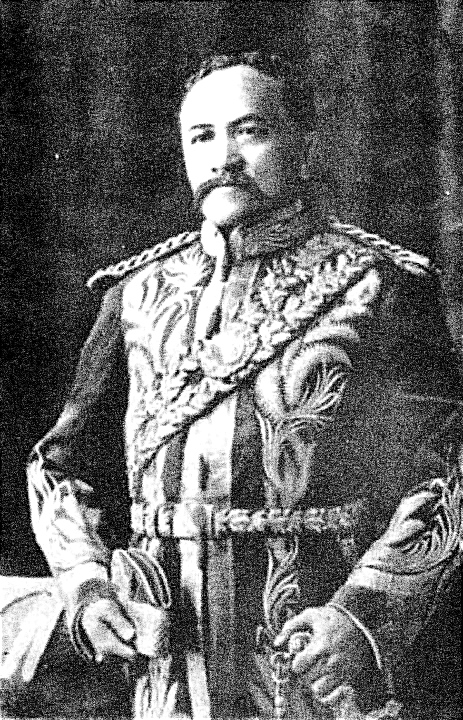
Sultan Abdullah of Perak

In the 19th century, the Bugis, Acehnese, and the Thai all attempted to invade Perak. Only British intervention in 1820 prevented Siam from annexing Perak. Although the British were initially reluctant to establish a colonial presence in Malaya, increasing investment in the tin mines brought a great influx of Chinese immigrants, who formed rival clan groups allied with Malay chiefs and local gangsters, all of whom battled to control the mines. The Perak sultanate, involved in a protracted succession struggle, was unable to maintain order.
In her book The Golden Chersonese and The Way Thither (published 1892 G.P. Putnam's Sons) Victorian traveller and adventuress Isabella Lucy Bird (1831-1904) describes how Raja Muda Abdullah (as he then was) turned to his friend in Singapore, Tan Kim Ching. Tan, together with an English merchant in Singapore drafted a letter to Governor Sir Andrew Clarke which Abdullah signed. The letter expressed Abdullah's desire to place Perak under British protection, and "to have a man of sufficient abilities to show (him) a good system of government." In 1874, the Straits Settlements governor Sir Andrew Clarke convened a meeting on Pulau Pangkor, at which Sultan Abdullah was installed on the throne of Perak in preference to his rival, Sultan Ismail. This Pangkor Treaty also required that the sultan accept a British Resident, who would control all administrative issues other than those pertaining to religion or Malay custom. In 1875, various Perak chiefs assassinated the British Resident James W.W. Birch, resulting in the short-lived Perak War of 1876. Sultan Abdullah was exiled to the Seychelles, and the British installed a new ruler. The new resident, Sir Hugh Low, was well versed in the Malay language and customs, and proved to be a more capable administrator. He also introduced the first rubber trees to Malaya.
In 1896, Perak joined Selangor, Negeri Sembilan and Pahang to form the Federated Malay States. However, the British Resident system lasted until Perak became part of the Federation of Malaya in 1948.
Perak gained independence from the British on August 31, 1957 along with 10 other states in the Federation of Malaya. The federation was enlarged to form Malaysia on September 16, 1963 following the admission of Sabah, Sarawak and Singapore. Singapore separated from Malaysia in 1965.
Administration
Constitutional monarchy
Royal throne of Perak

Under the laws of the Constitution of Perak, Perak is a constitutional monarchy, with a ceremonial hereditary ruler. The current Sultan of Perak is Sultan Azlan Muhibbuddin Shah ibni Almarhum Sultan Yussuf Izzuddin Shah Ghafarullahu-Lahu, who was the ninth Yang di-Pertuan Agong of Malaysia and formerly the Lord President of the Supreme Court of Malaysia.
Constitution of Perak
Standing Order of the Legislative Assembly (Sabah) - as reference
State Government
See also: State Seats Representatives, 12th Malaysian General Election#Perak
Following the opposition coalition winning Perak in the 2008 general election, Mohammad Nizar Jamaluddin of Pan-Malaysian Islamic Party (PAS) was appointed as the new Menteri Besar (Chief Minister) of the state eventually[1], although the Democratic Action Party (DAP) won the most seats compared to other opposition parties. The Menteri Besar did not come from the Chinese-based party as the State Constitution states that the Chief Minister must be a Muslim, unless the Sultan specially appoints a non-Muslim Chief Minister. As DAP does not have any Muslim assemblymen, if the Sultan insists that the Chief Minister must be a Muslim, then the assemblymen would have to come from either Parti Keadilan Rakyat (PKR) or PAS, which formed the coalition state government with DAP. On February 3 2009, Barisan Nasional, the national ruling party, gained control over the state government, after the defections of three Pakatan Rakyat assemblymen. [2] However, several cases have been filed in the Kuala Lumpur High Court challenging the validity of the new Barisan Nasional government, causing a constitutional crisis. Adding to this crisis is the fact that the Pakatan Rakyat Menteri Besar has refused to resign and states that he is still the legal Menteri Besar until he is removed through vote of no confidence or snap election.
Districts of Perak

State AnthemMalay English translation
Dilanjutkan Allah usianya Sultan
Adil dan murah memerintah watan
Ditaati rakyat kiri dan kanan
Iman yang soleh Allah kurniakan
Allah berkati Perak Darul Ridzuan
Allah selamatkan Negeri dan Sultan
Allah, grant the Sultan a long life
Just and gracious, ruling the homeland
Obeyed by the people left and right
Allah endow the righteous faith
Sanctify Perak Darul Ridzuan, O Allah
Salvage the State and Sultan, O Allah
Administrative divisions
Modern Perak is divided into 9 administrative districts or "daerah" in Malay. These 9 districts, are further divided into administrative Municipal councils (Majlis Bandaraya/Perbandaran and Daerah):
Kinta- Population: 751,826; Area: 1,958 km².
Majlis Bandaraya Ipoh
Majlis Daerah Kinta Selatan
Majlid Daerah Kinta Barat
Larut, Matang dan Selama (LMS)- Population: 273,321; Area: 2,103 km².
Majlis Perbandaran Taiping (administrate central and south-west part of district)
Majlis Daerah Selama (administrate north part of district)
Hilir Perak- Population: 191,098; Area: 1,727 km².
Majlis Perbandaran Teluk Intan (Majlis Daerah Hilir Perak)
Manjung- Population: 191,004; Area: 1,168 km².
Majlis Perbandaran Manjung (Majlis Daerah Manjung)
Batang Padang- Population:152,137; Area: 2,730 km².
Majlis Daerah Tapah
Majlis Daerah Tanjong Malim
Kerian- Population: 52,651; Area: 938 km².
Majlis Daerah Kerian
Kuala Kangsar- Population: 154,048; Area: 2,541 km².
Majlis Perbandaran Kuala Kangsar (Majlis Daerah Kuala Kangsar)
The town of Lenggong, in Hulu Perak District.
Hulu Perak- Population: 82,195; Area: 6,558 km².
Majlis Daerah Gerik
Majlis Daerah Pengkalan Hulu
Malis Daerah Lenggong
Perak Tengah- Population: 82,103; Area: 1,282 km².
Majlis Daerah Perak Tengah
Please note that the districts of Kerian and Larut, Matang dan Selama have been wrongly labelled in the map on the right. Both districts are in the northwest corner of the state. Kerian district is in the west and Larut, Matang dan Selama is in the east.
These districts eventually are divided into several Mukims or Counties which are more politically significant.The main cities and towns in Perak are:
Ipoh
Taiping
Teluk Intan
Sungai Siput
Kuala Kangsar
Lumut
Batu Gajah
Tanjung Malim
[edit]
Perak constitutional crisis
Main article: 2009 Perak constitutional crisis
In February 2009, Barisan Nasional retook Perak State Assembly from the Pakatan Rakyat government, after the defections of Hee Yit Foong (Jelapang), Jamaluddin Mohd. Radzi (Behrang) and Mohd. Osman Jailu (Changkat Jering) to Barisan Nasional as independent assemblymen. The Sultan of Perak dismissed the Pakatan Rakyat government but refused to dissolve the state assembly and thus trigger new elections. Amid multiple protests, lawsuits and arrests, a new Barisan Nasional-led State Assembly was sworn in on May 7, but the takeover was ruled illegal by the High Court in Kuala Lumpur on on May 11, 2009, restoring power to the Pakatan Rakyat
Legends tell of a Hindu-Malay kingdom called Gangga Negara in the northwest of Perak. Archaeological discoveries indicate that Perak has been inhabited since prehistoric times.
The modern history of Perak began with the fall of the Malacca Sultanate. The eldest son of the last Sultan of Melaka (Sultan Mahmud Shah), Raja Muzaffar Shah, fleeing the Portuguese conquest of 1511, established his own dynasty on the banks of the Sungai Perak (Perak River) in 1528. As the Perak area was extremely rich in tin, it was under almost continuous threat from outsiders.
Dutch colonialism

The ruins of the Dutch Fort on Pangkor Island
The Dutch unsuccessfully attempted to monopolize the tin trade in the 17th century, and built forts at the mouth of the Perak River and on Pulau Pangkor.
Early history of the Dutch arrival in Perak began in 1641, when they captured the Straits of Malacca by taking control of tin-ore and spice trading. The Dutch attempted to monopolise the tin-ore tradings in Perak by influencing Sultan Muzaffar Syah, the Sultak, but did not succeed. They then turned to Sultanah Tajul Alam Safiatuddin, the Sultan of Aceh, to seek permission to trade in Perak. The event compelled the Sultan of Perak to sign the treaty, allowing the Dutch to build their plant in Kuala Perak on August 15 1650, which caused dissatisfaction among the aristocracy of Perak.
In 1651, Temenggung and the people of Perak attacked and destroyed the Dutch plant. The Dutch were forced to leave their base in Perak.
In 1655, the Dutch sent a representative to Perak to renew the agreement made earlier and to seek compensation for the loss of their plant. Perak however did not honour the treaty and was thus surrounded by the Dutch. In retaliation, the people of Perak with Aceh, Ujung Salang, launched a surprise attack on the Dutch.
In 1670, the Dutch returned to Perak to build Kota Kayu, now known as Kota Belanda ("Dutch Fortress"), on Pangkor Island.
Perak agreed to the construction because of news that the Kingdom of Siam would be attacking the state. Nevertheless, in 1685, once again Perak attacked the Dutch on Pangkor Island and forced them to retreat and shut down their headquarters. The Dutch attempted to negotiate for a new treaty but failed.
British colonialism
Sultan Abdullah of Perak
In the 19th century, the Bugis, Acehnese, and the Thai all attempted to invade Perak. Only British intervention in 1820 prevented Siam from annexing Perak. Although the British were initially reluctant to establish a colonial presence in Malaya, increasing investment in the tin mines brought a great influx of Chinese immigrants, who formed rival clan groups allied with Malay chiefs and local gangsters, all of whom battled to control the mines. The Perak sultanate, involved in a protracted succession struggle, was unable to maintain order.
In her book The Golden Chersonese and The Way Thither (published 1892 G.P. Putnam's Sons) Victorian traveller and adventuress Isabella Lucy Bird (1831-1904) describes how Raja Muda Abdullah (as he then was) turned to his friend in Singapore, Tan Kim Ching. Tan, together with an English merchant in Singapore drafted a letter to Governor Sir Andrew Clarke which Abdullah signed. The letter expressed Abdullah's desire to place Perak under British protection, and "to have a man of sufficient abilities to show (him) a good system of government." In 1874, the Straits Settlements governor Sir Andrew Clarke convened a meeting on Pulau Pangkor, at which Sultan Abdullah was installed on the throne of Perak in preference to his rival, Sultan Ismail. This Pangkor Treaty also required that the sultan accept a British Resident, who would control all administrative issues other than those pertaining to religion or Malay custom. In 1875, various Perak chiefs assassinated the British Resident James W.W. Birch, resulting in the short-lived Perak War of 1876. Sultan Abdullah was exiled to the Seychelles, and the British installed a new ruler. The new resident, Sir Hugh Low, was well versed in the Malay language and customs, and proved to be a more capable administrator. He also introduced the first rubber trees to Malaya.
In 1896, Perak joined Selangor, Negeri Sembilan and Pahang to form the Federated Malay States. However, the British Resident system lasted until Perak became part of the Federation of Malaya in 1948.
Perak gained independence from the British on August 31, 1957 along with 10 other states in the Federation of Malaya. The federation was enlarged to form Malaysia on September 16, 1963 following the admission of Sabah, Sarawak and Singapore. Singapore separated from Malaysia in 1965.
Administration
Constitutional monarchy
Royal throne of Perak

Under the laws of the Constitution of Perak, Perak is a constitutional monarchy, with a ceremonial hereditary ruler. The current Sultan of Perak is Sultan Azlan Muhibbuddin Shah ibni Almarhum Sultan Yussuf Izzuddin Shah Ghafarullahu-Lahu, who was the ninth Yang di-Pertuan Agong of Malaysia and formerly the Lord President of the Supreme Court of Malaysia.
Constitution of Perak
Standing Order of the Legislative Assembly (Sabah) - as reference
State Government
See also: State Seats Representatives, 12th Malaysian General Election#Perak
Following the opposition coalition winning Perak in the 2008 general election, Mohammad Nizar Jamaluddin of Pan-Malaysian Islamic Party (PAS) was appointed as the new Menteri Besar (Chief Minister) of the state eventually[1], although the Democratic Action Party (DAP) won the most seats compared to other opposition parties. The Menteri Besar did not come from the Chinese-based party as the State Constitution states that the Chief Minister must be a Muslim, unless the Sultan specially appoints a non-Muslim Chief Minister. As DAP does not have any Muslim assemblymen, if the Sultan insists that the Chief Minister must be a Muslim, then the assemblymen would have to come from either Parti Keadilan Rakyat (PKR) or PAS, which formed the coalition state government with DAP. On February 3 2009, Barisan Nasional, the national ruling party, gained control over the state government, after the defections of three Pakatan Rakyat assemblymen. [2] However, several cases have been filed in the Kuala Lumpur High Court challenging the validity of the new Barisan Nasional government, causing a constitutional crisis. Adding to this crisis is the fact that the Pakatan Rakyat Menteri Besar has refused to resign and states that he is still the legal Menteri Besar until he is removed through vote of no confidence or snap election.
Districts of Perak

State AnthemMalay English translation
Dilanjutkan Allah usianya Sultan
Adil dan murah memerintah watan
Ditaati rakyat kiri dan kanan
Iman yang soleh Allah kurniakan
Allah berkati Perak Darul Ridzuan
Allah selamatkan Negeri dan Sultan
Allah, grant the Sultan a long life
Just and gracious, ruling the homeland
Obeyed by the people left and right
Allah endow the righteous faith
Sanctify Perak Darul Ridzuan, O Allah
Salvage the State and Sultan, O Allah
Administrative divisions
Modern Perak is divided into 9 administrative districts or "daerah" in Malay. These 9 districts, are further divided into administrative Municipal councils (Majlis Bandaraya/Perbandaran and Daerah):
Kinta- Population: 751,826; Area: 1,958 km².
Majlis Bandaraya Ipoh
Majlis Daerah Kinta Selatan
Majlid Daerah Kinta Barat
Larut, Matang dan Selama (LMS)- Population: 273,321; Area: 2,103 km².
Majlis Perbandaran Taiping (administrate central and south-west part of district)
Majlis Daerah Selama (administrate north part of district)
Hilir Perak- Population: 191,098; Area: 1,727 km².
Majlis Perbandaran Teluk Intan (Majlis Daerah Hilir Perak)
Manjung- Population: 191,004; Area: 1,168 km².
Majlis Perbandaran Manjung (Majlis Daerah Manjung)
Batang Padang- Population:152,137; Area: 2,730 km².
Majlis Daerah Tapah
Majlis Daerah Tanjong Malim
Kerian- Population: 52,651; Area: 938 km².
Majlis Daerah Kerian
Kuala Kangsar- Population: 154,048; Area: 2,541 km².
Majlis Perbandaran Kuala Kangsar (Majlis Daerah Kuala Kangsar)
The town of Lenggong, in Hulu Perak District.
Hulu Perak- Population: 82,195; Area: 6,558 km².
Majlis Daerah Gerik
Majlis Daerah Pengkalan Hulu
Malis Daerah Lenggong
Perak Tengah- Population: 82,103; Area: 1,282 km².
Majlis Daerah Perak Tengah
Please note that the districts of Kerian and Larut, Matang dan Selama have been wrongly labelled in the map on the right. Both districts are in the northwest corner of the state. Kerian district is in the west and Larut, Matang dan Selama is in the east.
These districts eventually are divided into several Mukims or Counties which are more politically significant.The main cities and towns in Perak are:
Ipoh
Taiping
Teluk Intan
Sungai Siput
Kuala Kangsar
Lumut
Batu Gajah
Tanjung Malim
[edit]
Perak constitutional crisis
Main article: 2009 Perak constitutional crisis
In February 2009, Barisan Nasional retook Perak State Assembly from the Pakatan Rakyat government, after the defections of Hee Yit Foong (Jelapang), Jamaluddin Mohd. Radzi (Behrang) and Mohd. Osman Jailu (Changkat Jering) to Barisan Nasional as independent assemblymen. The Sultan of Perak dismissed the Pakatan Rakyat government but refused to dissolve the state assembly and thus trigger new elections. Amid multiple protests, lawsuits and arrests, a new Barisan Nasional-led State Assembly was sworn in on May 7, but the takeover was ruled illegal by the High Court in Kuala Lumpur on on May 11, 2009, restoring power to the Pakatan Rakyat
"A HISTORY OF PERAK"
22 SCANNED FACTS OF ORANG KAYA BEREMPAT
BY R.O WINSTEDT & R.J WILKINSON
Click On Each Image To View In Full Size:


VERY FUNNY TO THINK...
Recently i seldom think, where is justice among society we live in, when a small issues regarding of what i post is a major hysteria to some others. But what i can't tell you the audience is... again and again, the reason of this blog are published are not to hurt anyone but it is just a total for history facts only and what i think that's not right among issues regarding perak families, to tell you the truth i am not political inclined at all nor just sahaja suka-suka menyibuk hal orang lain melainkan apa yang dirasakan tidak adil, i just post it on anywhere that i think is proper and decent, that's why my nic for this blog i name it to JusticeBeDone, Anyway if you come across to my publishing (this blog), i would rather soul speak my gratitude of forgiveness because my act of poetic justice that i've done several month back.
You can say that "telajak perahu boleh berundur, telajak kata tiada berguna", Yes that's true but.. there is a but, the answer is my friends where is our freedom of speechness in our lovable country that we reside so many years we called "MALAYSIA."
I will not stop from writing because of these issues but what i can say that is, you do not judge a book from it's cover, think wisely.. give a breath in out or two and because of your act you may not be a favouriteism among some others...
Wassalam from JusticeBeDone.. 2009
You can say that "telajak perahu boleh berundur, telajak kata tiada berguna", Yes that's true but.. there is a but, the answer is my friends where is our freedom of speechness in our lovable country that we reside so many years we called "MALAYSIA."
I will not stop from writing because of these issues but what i can say that is, you do not judge a book from it's cover, think wisely.. give a breath in out or two and because of your act you may not be a favouriteism among some others...
Wassalam from JusticeBeDone.. 2009
Subscribe to:
Comments (Atom)


